Hydrogen
Hydrogen can make an important contribution to the energy transition. It can support both a more sustainable society and economic development in the Netherlands and Europe. At the same time, the development and use of hydrogen require technological innovation and close cooperation between government, industry and market parties. Hydrogen use also involves costs and risks that need to be carefully managed. On this page you will find information about different hydrogen production routes, ongoing innovation, and the role hydrogen may play in the future energy systems of the Netherlands and Europe.
Hydrogen is the most abundant element in the universe. Under normal conditions it is a gas, known as hydrogen gas (H₂). When hydrogen reacts with oxygen in a fuel cell, the only by-product is water.
Hydrogen gas is also the lightest gas known and therefore has a relatively low energy density. For practical use it is often compressed, making it more suitable for storage and transport. Compressing hydrogen gas requires energy, typically around 10% of the stored energy content.
Hydrogen is currently used primarily in the chemical industry, for example as a feedstock and for process heat, and for fertiliser production. In the future, hydrogen is also expected to play a role in steel production.
Green hydrogen is also referred to as renewable hydrogen. It is produced using renewable electricity and therefore has a low climate impact.
The most common production method is electrolysis, in which water (H₂O) is split into hydrogen (H₂) and oxygen (O₂) using electricity from renewable sources. In this way, hydrogen functions as an energy carrier. Electrolysis inevitably involves energy losses, typically around 30%.
In the Netherlands, many parties are experimenting with electrolysers at the megawatt scale. At TNO’s Faraday laboratory, research focuses on technological breakthroughs to enable further upscaling.
Grey hydrogen
Most hydrogen currently produced worldwide is not sustainable. This hydrogen is referred to as grey hydrogen.
Grey hydrogen is mainly produced via Steam Methane Reforming (SMR). In this process, steam (H₂O) reacts with natural gas (CH₄) at a high temperature and under high pressure, producing hydrogen (H₂) and carbon dioxide (CO₂).
In the Netherlands, around 0.8 million tonnes of H₂ are produced annually in this way. This requires approximately 4 billion cubic metres of natural gas and results in around 12.5 million tonnes of CO₂ emissions.
Blue hydrogen
Hydrogen is referred to as blue hydrogen, or sometimes low-carbon hydrogen, when most of the CO₂ released during grey hydrogen production is captured and stored – typically 80–90% or more. This process, known as Carbon Capture and Storage (CCS), could take place in many areas, for example in depleted gas fields under the North Sea.
At present, large-scale production of blue hydrogen takes place in only a limited number of locations worldwide.
Turquoise hydrogen
Turquoise hydrogen is produced from natural gas using molten metal pyrolysis. In this process, natural gas passes through molten metal, producing hydrogen gas and solid carbon instead of CO₂. The solid carbon may be used in products such as tyres.
This technology is still at the laboratory stage, and it is expected to take at least 10 years before a first pilot plant becomes operational.
White hydrogen
White hydrogen occurs naturally in the subsurface, similar to natural gas. How sustainable white hydrogen is remains uncertain, and further research is needed to assess its potential.
White hydrogen is not produced from fossil fuels (grey hydrogen) and does not rely on carbon capture (blue hydrogen). No white hydrogen is currently produced in the Netherlands. Research is under way – including by TNO – into the possibility of extracting white hydrogen from the Dutch subsurface, but the chances of large-scale production are considered very small.
Key differences compared with green hydrogen
Beyond the production method, there are several important differences between green hydrogen and other hydrogen types:
- Only green hydrogen allows for the large-scale use of renewable electricity generated at sea and on land within the energy system. Electrolysis is the only method that converts electricity into hydrogen for storage.
- Large-scale electrolysis helps meet the growing demand for electricity, thus stimulating the further use of renewable energy.
- Green hydrogen is highly pure and can be used directly, for example in vehicle fuel cells. Other hydrogen types generally require additional purification after production.
- Blue hydrogen can provide a way to reduce CO₂ emissions in industry at scale and at relatively low cost by limiting emissions from existing hydrogen production routes.
In today’s energy mix, around 20% is supplied in the form of electricity and 80% as natural gas or liquid fossil fuels. This balance will change significantly in the coming years as countries work towards climate targets.
The share of electricity generated from wind and solar will increase substantially. For a number of applications, however, there is currently no suitable electric alternative, meaning an ongoing demand for a sustainable gaseous energy carrier. Examples include heavy transport, high-temperature industrial processes and aviation.
Hydrogen can play a useful role here as an energy carrier and is therefore becoming increasingly important in the transition to a sustainable energy system. Hydrogen is also relevant as a form of large-scale energy storage for periods with little wind or sunshine, contributing to security of supply and energy independence. It is one of the few options available for storing energy over longer periods.
In addition to its role as an energy carrier, hydrogen is widely used in chemical processes. It can, for example, be used to produce synthetic methanol, which can then be converted into olefins or aromatics.
Hydrogen combustion engines are a scalable solution for decarbonising heavy transport and maritime applications, alongside battery-electric mobility. By building on existing engine technologies, infrastructure and expertise, hydrogen can be used without relying on scarce raw materials.
TNO develops advanced injection systems and works with partners in demonstration projects. Using extensive test facilities and initiatives such as Green Transport Delta, TNO contributes to the further development of hydrogen engines for trucks, ships and mobile machinery. This supports CO₂ reduction and accelerates the energy transition in the transport sector.
Hydrogen is important for industrial applications. It is currently mainly used in refineries and fertiliser production, but in future it can also be used for high-temperature processes, such as steel production, where natural gas or coal is currently used.
Hydrogen is also expected to play a role in mobility, for example for regional buses covering longer distances where battery-electric solutions are less suitable, and for the production of liquid fuels for shipping and aviation.
In the short term, citizens are unlikely to notice major changes. The use of hydrogen in residential buildings is not expected for many years. For most homes, collective heat networks or electric heat pumps are more suitable solutions.
In transport, the number of hydrogen vehicles and hydrogen refuelling stations (seven public locations as of September 2022) is gradually increasing. Nevertheless, fully electric vehicles are expected to become dominant for passenger cars.
Hydrogen gas is a very light gas, highly flammable and used under high pressure in mobility applications. As with any gas, careful handling during production, transport and use is essential. Its use should therefore be limited to professional organisations.
Before hydrogen can be introduced into existing gas pipelines, the behaviour of hydrogen must be studied carefully. Hydrogen is lighter than natural gas and can escape more easily through valves and seals.
TNO carries out research across the entire hydrogen value chain, including hydrogen production, hydrogen infrastructure and hydrogen applications.
In 2020 alone, TNO completed more than 50 projects related to hydrogen, serving various purposes:
Policy innovation
Supporting technical, social and policy innovation required to accelerate hydrogen development as part of the transition towards a climate-neutral energy system.
Ecosystems and civil-society partners
Stimulating the development of ecosystems involving industry and civil-society partners around specific hydrogen themes, such as electrolyser manufacturing (Electrolyser Makers Platform), industrial electrification (Voltachem programme) and offshore system integration using hydrogen (North Sea Energy programme).
Competitive position
Strengthening the international competitive position of the Netherlands.
Between 2000 and 2018, around 230 electrolysis projects were commissioned, with a total capacity of approximately 100 MW (source: IEA 2019, The Future of Hydrogen report). In 2020, 200 MW was installed worldwide, rising to around 2,400 MW by the end of 2023.
These figures clearly show that we are still at an early stage and that a completely new supply chain needs to be developed.
We need new companies, suppliers and manufacturers to develop materials and components for larger, next-generation electrolysis systems. This presents an opportunity for the high-tech industry in the Netherlands.
Developments in offshore hydrogen
Offshore wind energy plays a crucial role in the transition to cleaner energy sources. The Netherlands aims to develop significant capacity for green hydrogen by 2030, including two pilot projects and several smaller initiatives.
In a TNO report commissioned by Energy Innovation NL (pdf), we share insights into the potential, challenges and technological progress of offshore hydrogen production.
At present, four electrolysis technologies are available for water electrolysis: AEM, SOE, PEM and alkaline electrolysis. Each technology has its own advantages, limitations and level of technological maturity.
In this video, you can learn more about hydrogen production through electrolysis in the Faraday laboratory.
Across all four electrolysis technologies, three key challenges stand out:
- Reducing system costs
- Increasing system efficiency
- Enabling large scale production
The European Union has set the ambition to install 40 GW of electrolysis capacity within the EU by 2030, and an additional 40 GW in North Africa. Achieving these targets will require acceleration of both technological development and the implementation of actual projects.
The future
There are three main reasons why green hydrogen production will be important for the Netherlands:
- Wind energy potential
Green hydrogen makes it possible to utilise the wind energy potential of the North Sea to the full. At present, the electricity grid does not have sufficient capacity to absorb all planned offshore wind generation, which is expected to reach around 70 GW. By converting part of this electricity into hydrogen and using the existing high-pressure gas network, this renewable energy can still be transported efficiently through the energy system. - Decarbonisation
Hydrogen is needed to decarbonise sectors where direct electrification is not a viable option. Examples include the steel industry, aviation using synthetic kerosene, and long-distance transport using hydrogen, methanol or ammonia. - Seasonal storage
Hydrogen enables seasonal energy storage, which is essential for periods in north-west Europe when wind and solar availability is limited.
The Netherlands’ position
The Netherlands is well placed in hydrogen development due to:
- existing expertise in gas and electrolysis technologies;
- energy-intensive industries that need to decarbonise;
- the ability to utilise renewable energy from the North Sea through electrolysis;
- a strategic geographical location and strong ports, enabling the Netherlands to act as a hydrogen import hub for Europe;
- a strong manufacturing industry capable of supplying electrolyser components; and
- the potential to store large volumes of hydrogen in salt caverns and depleted gas fields in the Dutch subsurface, similar to current natural gas storage.
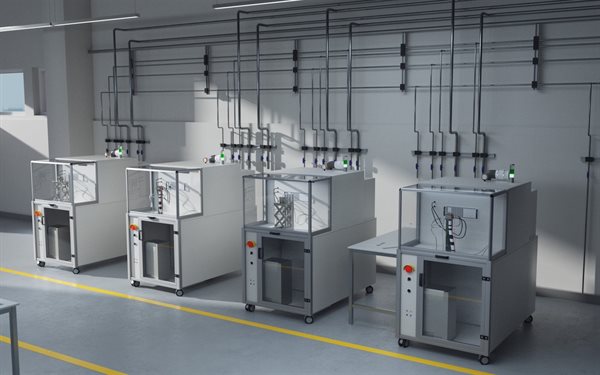
Optimising hydrogen production through electrolysis
We work in various ways to optimise and reduce the cost of green hydrogen production. Electrolysis is a proven technology, but several challenges and opportunities remain for large-scale industrial deployment.
Scaling up green hydrogen production
For large-scale production of green hydrogen from renewable sources such as wind and solar, technological barriers still need to be overcome. Electrolysis – the process of splitting water into hydrogen and oxygen – is essential to store large volumes of wind energy and transport them to industry and heavy transport applications. Currently, this takes place at a relatively limited scale.
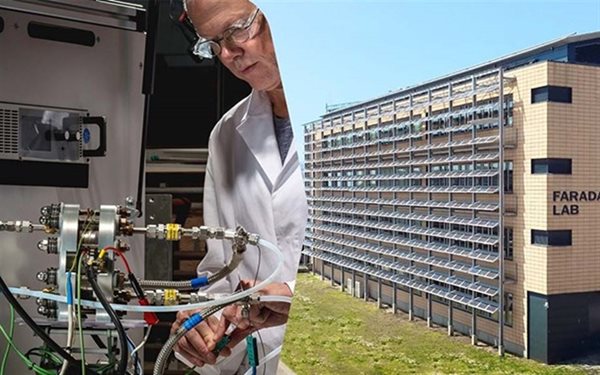
At the Faraday laboratory, Europe’s largest hydrogen research facility, TNO works on technological breakthroughs to enable large-scale deployment.
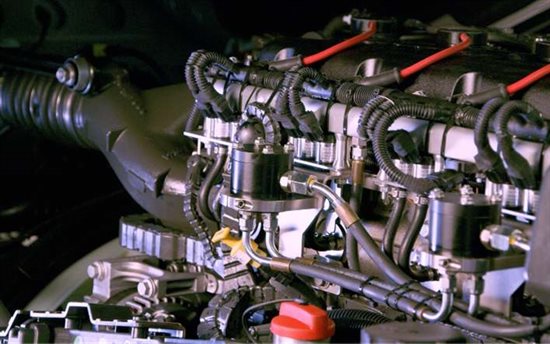
Hydrogen internal engine accelerates energy transition
To meet climate targets and accelerate the decarbonisation of the transport sector, heavy road vehicles and maritime transport will require additional clean alternatives alongside battery-electric solutions. Hydrogen offers such an option. TNO Mobility & Built Environment uses long-standing expertise in combustion engines and hydrogen for the further development and scaling of hydrogen engine technologies.
Our impact
-
HyTROS: mapping and mitigating risks in the hydrogen network

Status project
2023 - present
In cooperation with
11 universities, 2 research institutes, 2 universities of ...
-
IPOSH: groundbreaking cost-effective offshore hydrogen production

In cooperation with
H2sea and Bosch Thin Metal Technologies
-
HyPRO: the road to cost-efficient green-hydrogen production

Status project
2024 - present
In cooperation with
Eleven universities, five universities of applied sciences ...
-
Netherlands and Brazil join forces for green hydrogen in the Green Ports Partnership

Status project
2024 - present
In cooperation with
Havenbedrijf Rotterdam, Rijksdienst voor Ondernemend ...
-
HY3+: ensuring security of supply of hydrogen network with neighbouring countries

Status project
Ongoing
In cooperation with
Arcadis
-
From wind to hydrogen: the energy of the future

In cooperation with
HYGRO Energy
-
Large-scale production of green hydrogen through electrolysis

-
H-vision: blue hydrogen to accelerate carbon-low industry

-
PosHYdon: Green hydrogen from seawater thanks to unique trial plant

In cooperation with
Nexstep, Neptune Energy Netherlands (Eni), Gasunie, Eneco, ...
-
Identifying the future international chain of green hydrogen

-
Hydrogen production: The economic perspective for Dutch industry

Status project
2020 - present
In cooperation with
The HyScaling consortium of the Institute for Sustainable ...
All about hydrogen
Sailing with an engine that emits only water? Mitsubishi and TNO prove it’s possible

Clean and robust hydrogen engine pivotal for achieving emissions targets heavy transport
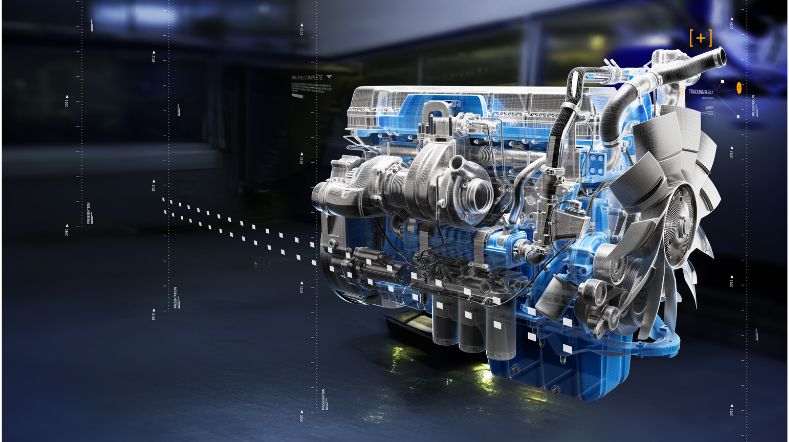
Hydrogen in the energy system: The future of sustainable energy in the Netherlands and Europe
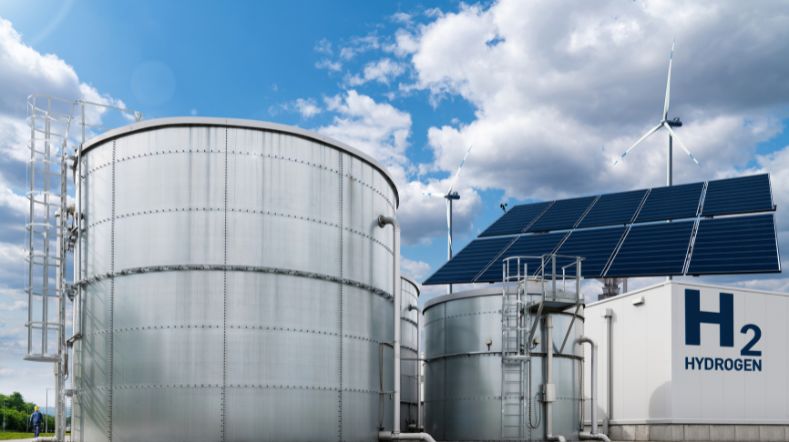
NORCE and TNO are entering into a strategic partnership on hydrogen developments

Dutch consortium participates in EU research project on large-scale hydrogen storage in depleted gas fields